Showing posts with label alternative diets. Show all posts

Friday, July 18, 2014

Seitan isn't scary!

I love seitan. It's probably my favorite food - after maybe sweet potatoes and ginger.

One thing that makes me sad about seitan is that people are so scared of making it. For some reason, it has become this big terrifying monster looming over the vegan kitchen. And it doesn't have to be.

Seitan is actually really easy to make. Plan on your first batch failing miserably. For some reason this seems to happen. I don't know anyone who has had a perfect first batch. The thing is, after the first one it almost always seems to work.

So here's some tips to make your journey into the world of seitan much easier. I've peppered the post with some of my favorite seitan meals from my Instagram to help inspire you.

  • Homemade seitan is incredibly versatile. Depending on how you season it and shape it, you can create a thousand dishes. Pot roasts, fajitas, meatballs, a Thanksgiving turkey, burgers, southern fried chicken, or anything else you can imagine. Therefore, don't get yourself too stuck on one singular recipe. Get creative and don't be afraid to experiment.


The birthday dinner my husband made for me. It's breaded and fried seitan served with glazed carrots, mashed potatoes and a homemade barbecue sauce.
  • I am most familiar and comfortable with simmered seitan. You can also make it steamed. To simmer seitan, you create a dough with liquids and vital wheat gluten, then simmer it in a delicious broth for around 45 minutes. What you get is a solid chunk of meat, dead bodies not included. You can then cook this pretty much any way you would cook animal-based meat, though it doesn't need as long a cook time as something like chicken would.

Quick pad thai made with leftover seitan strips and whatever veggies I had sitting around.
  • The best ratio I've found for delicious seitan is 2 parts dry to 1 part liquid. Put the dry ingredients in a big bowl and then stir in the wet. Once a dough starts to form, finish mixing it with your hands and knead it for a couple of minutes.

One of our seitan turkeys from thanksgiving. We always have to make more than one because the vegan men eat way too much and all of the omnivores have a few slices too.
  • The dry is typically almost exclusively vital wheat gluten with different herbs and spices added. I like to add a bunch of ground ginger if I'm planning to make an Asian inspired dish, and I've made delicious sausage by adding lots of fennel and ground pepper. 

Asian-inspired burgers.
  • The liquid is mostly composed of broth, but should also include something salty (usually soy sauce), some oil and some acid. My base recipe usually uses olive oil and lemon juice, but you can easily sub most other oils (grapeseed is wonderfully mild) and other acidic liquids (for burgers, try a splash of apple cider vinegar). You can also add minced garlic into the liquid. 
Grilled mango ginger seitan over brown rice.

  • To change up the texture and the taste, sub up to half of the wheat gluten with chickpea flour. This is my favorite for making burgers, meatballs or pork chops. 
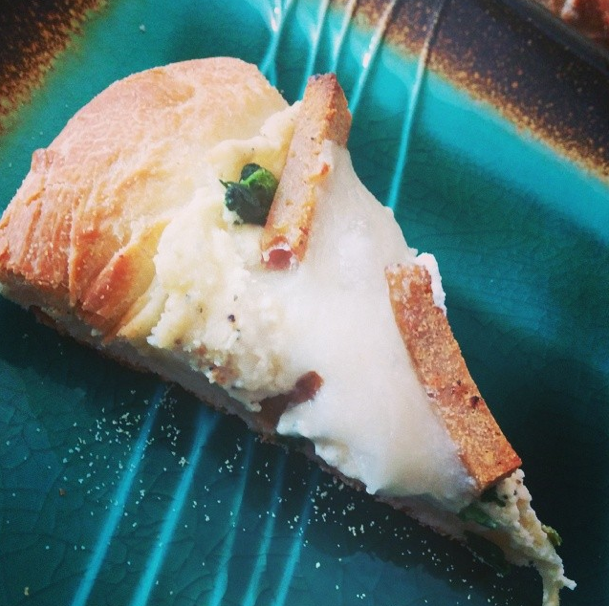
White pizza with seitan strips, onions, spinach and lots of homemade alfredo and mozzarella.

  • Once you've made the dough, you can cut it up into pieces, shape it into burger or meatballs, or just make a big roast. You can also just cut it and slice it up after it's prepared. I usually cut the dough into 3 or 4 chunks, unless I'm making something like burgers or a pot roast. Keep in mind that the seitan will expand while it simmers, so that you don't end up with burgers twice the size of the bread.
These are the burgers that put vegans in heaven and have omnivores begging for the recipe.
  • Let the dough rest a few minutes before dumping it into the broth.

  • Seitan dough is simmered in a delicious broth in a large saucepan or stock pot. The simmering broth should cover the seitan. Make the broth by mixing a few cups of veggie broth, water, a splash of soy sauce and at least one boullion cube or a comparable seasoning. You can also add more herbs and spices to the broth, as it will affect the flavor of the final product. Sometimes I add a bay leaf and some herb blends to it, along with mashed garlic cloves. 
Thanksgiving leftover sliders. Rolls with a slice of that delicious roast you just saw, covered in mashed potatoes, cheesy corn and gravy.

  • When you're simmering seitan the most important thing in the world is to not let the water boil once the seitan is in there, particularly during the first 20 minutes. If you have a finicky stove, you might need to hang out in the kitchen adjusting the heat. Once you've made it a few times, you'll get a feel for what works best for your pot and your stove.
Pecan crusted seitan. This is one of our favorite dishes. Seitan cutlets are coated in a panko and ground pecan mixture and then pan fried.

  •  So you've done everything perfectly and the finished seitan is soft and mushy? Grease a cookie sheet and toss it into the oven for a few minutes at 300 degrees F. This won't work if you end up with pureed brains, but it will firm up seitan that's a bit too soft.
Crazy-messy taco filling made with cubed seitan, quinoa, veggies and lots of spices.

  • The best seitan is made with homemade broth. Save the ends of veggies as you cut them and store them in the freezer. Then, fill up a giant pot with water, a dash of soy sauce, a bay leaf and whatever veggies you have in the freezer or sitting around. I try to always include onions, potatoes and garlic, but anything else goes. You can also use carrot or potato peels and broccoli stalks. Simmer the whole mess for a few hours, strain it all and store in the fridge in jars. It's a thousand times better than the boxed or canned stuff, and costs next to nothing to make. 
Tandoori setian skewers. Seitan is the answer to all vegan grilling problems.

  • One of the best things about seitan is that it keeps really well in the fridge or freezer, and it's easy to make a huge amount at once. Just store it in a big glass or tupperware container filled with the broth you simmered it in. If you'll be using it within a week, keep it in the fridge. If it's going to be longer, toss it in the freezer. You can also marinate seitan overnight or for a few days. This is a great practice for making delicious and easy weekday meals. The seitan is already made, so can just chop it up and add it to any quick meal. 
Making seitan pastelillos (or empanadas). A Puerto Rican dish, veganized. This is before I fried them, obviously.

  • If you want to get a really crisp "skin" on the seitan, lightly dust the pieces in flour and pan fry on medium high heat in a little bit of oil.

Still not completely sold? There are some store bought seitan brands out there, but even the few that are really yummy are usually hard to find and pale in comparison to the taste a versatility of homemade. For the record, my favorite brand of seitan is Upton's Naturals, so give them a try if you are new to the seitan world. It can be hard to find, though, and you might need to order it online (according to their website, they don't sell a single one of their products in Florida with the exception of the panhandle. Which we all know isn't really 100% Florida). A lot of vegetarian and vegan restaurants also make their own seitan, and I've only been to one restaurant where that house seitan is bad, so if you are lucky enough to try it at a restaurant, go ahead!

Good luck and let me know any of your foolprood seitan tips and tricks!

Sunday, February 16, 2014

More than just a diet, the vegan lifestyle is gaining ground

Celebrities ranging from Beyonce to Al Gore have recently taken on vegan and plant-based lifestyles - either as a permanent change or a temporary diet. A Google Trends report shows that interest in veganism is up drastically since 2004, as searches for the word "vegan" have risen and a recent poll by Harris Interactive shows that the amount of vegetarian children in the United States is up 70 percent in the last few years.


What is all of the fuss about? Pehpsii Altemark Wilcox has identified as a vegan for 20 years and has seen the public's perception of veganism change during that time. She was 11 years old when she made the transition.

"I suppose it was my love and compassion for all living things that started it, but as I ate more veggies I got in to this whole new world of flavours that you just don't get from a "meat and potatoes" kind of diet, and that was it for me. I never missed my old diet one day." Wilcox says.

"When I was younger, people tended to assume I was some crazy activist that burned down labs." says Wilcox. That is not the case anymore.

"I feel like veganism is more commonly understood today. When I was in school I had to constantly explain what it meant over and over again. And explaining to pharmacists and hairdressers about animal products and by-products was a hassle. Today I feel like you can say "vegan" and most people get it." Wilcox says. 

"It's more common to see vegans in pop culture. I know a few very popular singers in rock/metal bands who are vegan and very open about it," Wilcox says. She also attributes the popularity of vegan documentaries (and their availability through websites like Netflix) such as Forks over Knives, An Inconvenient Truth and Earthlings as a cause for the recent changes. 

Other prominent people bringing veganism to the table, like Bill Gates, Joaquin Pheonix, Paul McCartney, Stella McCartney and Ellen DeGeneres have opened eyes to the vegan lifestyle.

Another factor might be that the vegan lifestyle is easier now than it used to be. "Just five to six years ago I remember it as being a bigger hassle than it is today. Most grocery chains have at least a few vegan options in their freezers nowadays," says Wilcox. 


"I think representation is key for any kind of minority movement. Going from grassroot/activism to mainstream as fast as veganism has can only be attributed to the intense media climate we have today. A University study on how Vegans live longer and stay healthier can be posted online on a Monday and by Friday it has been featured in magazines, blogged about and shared in social medias on all continents and read by millions," says Wilcox.

Not all vegans believe that this new found attention is a good thing. Alan O'Reilly says "I'm not at all certain that it's in the correct or most helpful way. Veganism is, I believe, now widely regarded as a mere matter of diet rather than the moral baseline of animal rights that it actually is." O'Reilly has been vegan for five years.

Sal Carr, who has been vegan five months, thinks that vegans themselves have a lot of power to change the way the community and lifestyle is viewed. "I try to be patient and informative whenever people ask me about veganism as I, not so long ago, was a non-vegan and blind to the cruelty," she says.

"Another side of media representation is that people get to see how different vegans are from each other. Just take the contrast between Steve-O from Jackass and Paul McCartney of the Beatles for example. Both are vegans but extremely different." Wilcox says. 

Monday, November 11, 2013

Vegan Cooking Tips

I love to cook, so when I started my transition into the vegan lifestyle, experimenting with foods was a big part of my adventure. Here are a collection of tips that I've come across either from other vegan cooks or from my own experiments. Some of them might not be new to the more seasoned vegans out there, but hopefully there are some that you've never heard of before.

What milk do I use? With so many non-dairy milks on the market, it's sometimes confusing deciding which to use in certain recipes. 

As a general rule, almond milk is the most mild and is usually best in most savory recipes and can also be used in desserts.You can also use soy, rice, and hemp milk in most recipes.

Soy milk is highest in protein and is therefore best when you need to curdle the milk (for example, when you are replacing buttermilk. By the way, the recipe for that is about 1 tsp of vinegar to a cup of soy milk). Curdling works with most non-dairy milks, but soy will get you the best results.

When you are making desserts, coconut is usually a great option. It's flavor is a bit more distinct, but it has a much higher fat content and is a beautiful bright white that works well in lots of cakes and sauces. 

Also use coconut milk when your recipe calls for a higher fat form of dairy, like cream. If you need the milk to be even thicker and fattier, refrigerate a can of coconut milk for a few hours. The fat will begin to separate and rise to the top, so use the top of the can for your recipe.

Rice milk is one of the lightest tasting milks, so use it when you don't want the plant milk to weigh down your dish.

Cooking tofu. Tofu can be delicious if cooked well, but usually it's a tasteless spongy mush.

Freeze your tofu. When I buy tofu, I get home and I drain it and then I immediately put it in the freezer in little freezer bags. When you defrost the tofu later, it will drain out the water and you get a much more hearty, meaty texture. It also makes it way easier to marinate and season tofu, which is very important.

Crumbled tofu is a great way to get used to eat tofu and a great way to please people that don't like it. There are two ways to do it. 
First, crumble up the tofu with a fork. Spread the tofu on a lightly greased baking sheet, and then sprinkle seasonings over it. Make sure to use some salt, and don't really worry too much about over seasoning it. Bake the tofu at a low temperature, around 250, for a few hours. Stir it up every half hour or so. The tofu is done when it is a golden color and getting crispy around the edges. You can add this into anything an omnivore would add ground beef to. It's particularly yummy when you use it to stuff peppers and mushrooms or make tacos with. 
The other method is to crumble and marinate the tofu. Crumble it up in a bowl, and then add vinegar, soy sauce, and lots of herbs and spices. Stir periodically and let it sit for a while. Then cook up the tofu in a saute pan until it just starts to brown. This version is particularly good in lasagnas and other pasta dishes.

If you're looking to make slices of tofu, the same principle of marinating applies. Drain the tofu really, really well. Cut it into slices and marinate the slices in a casserole dish or baking pan. The longer they marinate, the better. Then drain the slices again (reserve the marinate!), and cook them in a saute pan with a little oil until they are golden on both sides. Put the slices back into the dish with the marinate, cover with foil, and bake at 350 for about 30 minutes. Depending on the type of marinate you used, serve with veggies, rice, mashed potatoes, or whatever fits. 

Eggs, eggs, eggs. There are a lot of options to replace eggs with when you're baking. Honestly, I think omnivores are so limited just putting eggs in everything. Here are some of the options and what they work best in. Keep in mind that you can mix different egg subs. Think about each individual recipe and which combination you think fits best.
Also, keep in mind that with all of these subs, you will need to add a bit more baking powder or baking soda than the recipe calls for. I find myself adding more even to recipes that are already vegan.

Ener-G - This is an egg replacing powder. You whisk a bit of the powder with warm water, and it actually gets a kind of eggy consistency. This is good in some cookie recipes and where another sub just doesn't seem to fit.

Bananas - A half of a mashed banana equals one egg. This sub is really great in quick breads, muffins, and particularly pancakes. It sometimes makes a dish come out a bit oilier, so cut down on the oil a tiny bit. Keep in mind that this will add a banana flavor to your dish. Usually that's a good thing.

Applesauce - 1/4 cup equals one egg. This is my absolute favorite egg sub. It works best in brownies and chocolate cakes. It doesn't add much of any flavor to the dish, so it's great when you have a lot of other flavors at play. You can also use applesauce to replace some of the oil in a recipe. Go ahead and try making brownies where you replace all of the eggs and all but a teaspoon of the oil with applesauce. They will be the best brownies you've ever had.

Ground Flax Seed - Mix it with warm water to make an egg. This is kind of an all purpose sub, but it tends to work best in savory or particularly hearty dishes.

Tofu - 1/4 cup of blended tofu equals one egg. This is good in recipes like cheesecakes and pies. Be careful about using too much, as it will get a very soy-like flavor. Obviously this only matters if you don't like soy flavors.

Pumpkin - 1/4 cup equals one egg. This is another fun egg sub. It's also best in quick breads and heartier desserts or muffins.

Whipped Cream. There are plenty of good dairy free whipped creams out there now, but sometimes it's nice to make a homemade version, and this one is good.

Take a can of full fat coconut milk and put it in your fridge. It needs to sit there at least a day or two without moving around much, so I usually just make sure I always have a can in the back of my fridge. 
Carefully open the can and spoon out the really thick fat off the top into a bowl. Add a teensy bit of vanilla and some powdered sugar (I'm not giving a strict amount because it depends so much on how sweet you like your whipped cream, but usually around a half cup is a good starting point). 
Then whip it up with a hand or stand mixer. It will take a little while, but soon enough it will look exactly like the dairy version, except it will taste way better.
Stick the bowl into the fridge for a little while so it can firm up just a bit more. Then serve. This is particularly good on a slice of vegan pumpkin pie.

Cutting down on meat cravings. Most vegans don't really crave meat after the first couple of months, but for those of you who are earlier on in your transition, this is the technique I used to avoid them. 

When you are craving meat, you usually aren't actually craving dead animal flesh. The flavors we associate with meat are actually just seasonings, sauces, and cooking methods. Therefore, take all of those delicious sauces and seasonings and throw them on veggies. Growing up, basically all of the meat I ate was seasoned with Adobo (a Hispanic seasoning blend). So I sprinkled it on to all of my veggies before roasting them or sauteing them and I never had any bad cravings. I never even felt like the meat was missing off my plate.


Friday, November 1, 2013

Puff Pastry with Gingered Pumpkin and Agave - Happy World Vegan Day!

Yesterday was Halloween. I've been so busy with life, that I barely even realized that it was October 31st. This really stinks because I love Halloween. I love costumes and I particularly love making fun and festive Halloween desserts. Yesterday afternoon, when I realized I wanted to do something for the holiday, I decided I was going to make a delicious pumpkin dessert and I was going to carve pumpkins with my fiance.

Unfortunately, it's actually pretty hard to find a pumpkin to carve on Halloween. Everyone already has their pumpkins and all the little patches have closed down. So we didn't get to carve pumpkins, but we did get this delicious dessert. Puff Pastry with Gingered Pumpkin and Agave. It's a little bit like a simplified napoleon, and it was very tasty. 


It's a much lighter dish than a lot of fall desserts. No offense to pumpkin spice cake, but it was refreshing.

You can make the filling in advance and just store it in the fridge. That actually helps it to stiffen up a little and makes it easier to serve.

Filling:
1 can of pumpkin puree (or you can use homemade puree)
4 tablespoons of agave
1 Ener-G egg (use a flax egg or another egg sub if you don't have Ener-G)
1/4 cup of vegan cream cheese
1/8 block of firm tofu, cut into cubes
1/2 teaspoon of vanilla
a dash or two each of cloves, cinnamon and all spice
1 inch of fresh ginger root, peeled

Pastry:
1 sheet of frozen puff pastry (check ingredient, most are actually vegan!)
1 tablespoon of Earth Balance
1 teaspoon of cinnamon sugar

Topping:
Agave
Powdered Sugar (optional)

Preheat your oven to 400 degrees.

To make the filling, just throw everything in your blender and set it on high until everything is really smooth. Make sure there's no chunks of ginger and tofu in there, because that would be weird.
Throw the filling in the fridge and let it sit there until you serve the dessert.

Defrost the puff pastry and cut along the folds. Then, cut each strip into 3 even pieces. You will have one oddball square of puff pastry when this is all done, but I'm sure you'll find a good use for it. Place each of the squares on a lightly greased cookie sheet

Melt the Earth Balance and mix in the cinnamon sugar. Brush the mixture over the top of each pastry square.

Bake the pastry for 10-15 minutes, until everything is golden and puffy.

To serve, place one square of puff pastry on a plate and top with a big spoonful of the pumpkin filling. Carefully put a second square of the pastry on top, creating a little sandwich. Then add a tiny spoonful of the filling on top.

Drizzle the whole thing with agave nectar and sift some powdered sugar over all of it.


Tuesday, October 1, 2013

Dietary Statistics in the United States

Organizations sometimes try to cater to offering extensive gluten free and kosher products, saying that there is a serious demand over offering vegan and vegetarian options. However, that perception is largely fabricated.

% of US population that identify as Jewish - 1.8% (and declining)
% of US population with Celiac Disease - 1%
% of US population that is vegan - 2-7% (and growing rapidly)
% of US population that is vegetarian - 5-6%

What do you think?

Sources:
http://www.usatoday.com/story/news/nation/2013/10/01/america-jews-religion-jewish/2900871/
http://www.celiaccentral.org/celiac-disease/facts-and-figures/
http://www.publicpolicypolling.com/main/2013/02/food-issues-polarizing-america.html#more
http://www.vrg.org/blog/2011/12/05/how-many-adults-are-vegan-in-the-u-s/