Showing posts with label vegan. Show all posts

Friday, July 18, 2014

Seitan isn't scary!

I love seitan. It's probably my favorite food - after maybe sweet potatoes and ginger.

One thing that makes me sad about seitan is that people are so scared of making it. For some reason, it has become this big terrifying monster looming over the vegan kitchen. And it doesn't have to be.

Seitan is actually really easy to make. Plan on your first batch failing miserably. For some reason this seems to happen. I don't know anyone who has had a perfect first batch. The thing is, after the first one it almost always seems to work.

So here's some tips to make your journey into the world of seitan much easier. I've peppered the post with some of my favorite seitan meals from my Instagram to help inspire you.

  • Homemade seitan is incredibly versatile. Depending on how you season it and shape it, you can create a thousand dishes. Pot roasts, fajitas, meatballs, a Thanksgiving turkey, burgers, southern fried chicken, or anything else you can imagine. Therefore, don't get yourself too stuck on one singular recipe. Get creative and don't be afraid to experiment.


The birthday dinner my husband made for me. It's breaded and fried seitan served with glazed carrots, mashed potatoes and a homemade barbecue sauce.
  • I am most familiar and comfortable with simmered seitan. You can also make it steamed. To simmer seitan, you create a dough with liquids and vital wheat gluten, then simmer it in a delicious broth for around 45 minutes. What you get is a solid chunk of meat, dead bodies not included. You can then cook this pretty much any way you would cook animal-based meat, though it doesn't need as long a cook time as something like chicken would.

Quick pad thai made with leftover seitan strips and whatever veggies I had sitting around.
  • The best ratio I've found for delicious seitan is 2 parts dry to 1 part liquid. Put the dry ingredients in a big bowl and then stir in the wet. Once a dough starts to form, finish mixing it with your hands and knead it for a couple of minutes.

One of our seitan turkeys from thanksgiving. We always have to make more than one because the vegan men eat way too much and all of the omnivores have a few slices too.
  • The dry is typically almost exclusively vital wheat gluten with different herbs and spices added. I like to add a bunch of ground ginger if I'm planning to make an Asian inspired dish, and I've made delicious sausage by adding lots of fennel and ground pepper. 

Asian-inspired burgers.
  • The liquid is mostly composed of broth, but should also include something salty (usually soy sauce), some oil and some acid. My base recipe usually uses olive oil and lemon juice, but you can easily sub most other oils (grapeseed is wonderfully mild) and other acidic liquids (for burgers, try a splash of apple cider vinegar). You can also add minced garlic into the liquid. 
Grilled mango ginger seitan over brown rice.

  • To change up the texture and the taste, sub up to half of the wheat gluten with chickpea flour. This is my favorite for making burgers, meatballs or pork chops. 
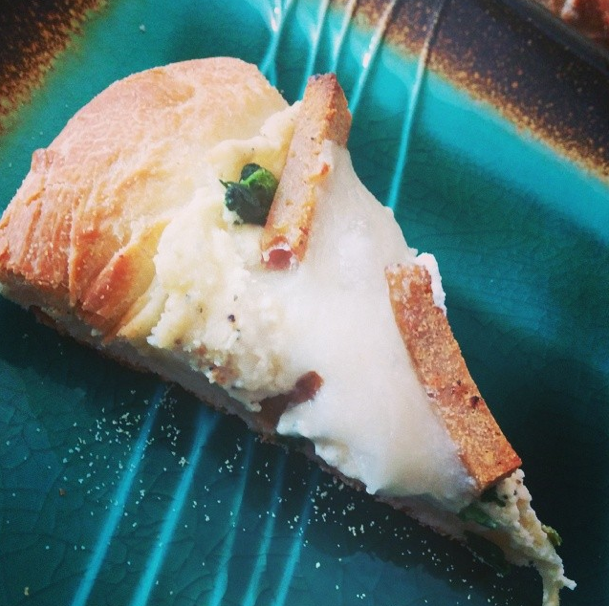
White pizza with seitan strips, onions, spinach and lots of homemade alfredo and mozzarella.

  • Once you've made the dough, you can cut it up into pieces, shape it into burger or meatballs, or just make a big roast. You can also just cut it and slice it up after it's prepared. I usually cut the dough into 3 or 4 chunks, unless I'm making something like burgers or a pot roast. Keep in mind that the seitan will expand while it simmers, so that you don't end up with burgers twice the size of the bread.
These are the burgers that put vegans in heaven and have omnivores begging for the recipe.
  • Let the dough rest a few minutes before dumping it into the broth.

  • Seitan dough is simmered in a delicious broth in a large saucepan or stock pot. The simmering broth should cover the seitan. Make the broth by mixing a few cups of veggie broth, water, a splash of soy sauce and at least one boullion cube or a comparable seasoning. You can also add more herbs and spices to the broth, as it will affect the flavor of the final product. Sometimes I add a bay leaf and some herb blends to it, along with mashed garlic cloves. 
Thanksgiving leftover sliders. Rolls with a slice of that delicious roast you just saw, covered in mashed potatoes, cheesy corn and gravy.

  • When you're simmering seitan the most important thing in the world is to not let the water boil once the seitan is in there, particularly during the first 20 minutes. If you have a finicky stove, you might need to hang out in the kitchen adjusting the heat. Once you've made it a few times, you'll get a feel for what works best for your pot and your stove.
Pecan crusted seitan. This is one of our favorite dishes. Seitan cutlets are coated in a panko and ground pecan mixture and then pan fried.

  •  So you've done everything perfectly and the finished seitan is soft and mushy? Grease a cookie sheet and toss it into the oven for a few minutes at 300 degrees F. This won't work if you end up with pureed brains, but it will firm up seitan that's a bit too soft.
Crazy-messy taco filling made with cubed seitan, quinoa, veggies and lots of spices.

  • The best seitan is made with homemade broth. Save the ends of veggies as you cut them and store them in the freezer. Then, fill up a giant pot with water, a dash of soy sauce, a bay leaf and whatever veggies you have in the freezer or sitting around. I try to always include onions, potatoes and garlic, but anything else goes. You can also use carrot or potato peels and broccoli stalks. Simmer the whole mess for a few hours, strain it all and store in the fridge in jars. It's a thousand times better than the boxed or canned stuff, and costs next to nothing to make. 
Tandoori setian skewers. Seitan is the answer to all vegan grilling problems.

  • One of the best things about seitan is that it keeps really well in the fridge or freezer, and it's easy to make a huge amount at once. Just store it in a big glass or tupperware container filled with the broth you simmered it in. If you'll be using it within a week, keep it in the fridge. If it's going to be longer, toss it in the freezer. You can also marinate seitan overnight or for a few days. This is a great practice for making delicious and easy weekday meals. The seitan is already made, so can just chop it up and add it to any quick meal. 
Making seitan pastelillos (or empanadas). A Puerto Rican dish, veganized. This is before I fried them, obviously.

  • If you want to get a really crisp "skin" on the seitan, lightly dust the pieces in flour and pan fry on medium high heat in a little bit of oil.

Still not completely sold? There are some store bought seitan brands out there, but even the few that are really yummy are usually hard to find and pale in comparison to the taste a versatility of homemade. For the record, my favorite brand of seitan is Upton's Naturals, so give them a try if you are new to the seitan world. It can be hard to find, though, and you might need to order it online (according to their website, they don't sell a single one of their products in Florida with the exception of the panhandle. Which we all know isn't really 100% Florida). A lot of vegetarian and vegan restaurants also make their own seitan, and I've only been to one restaurant where that house seitan is bad, so if you are lucky enough to try it at a restaurant, go ahead!

Good luck and let me know any of your foolprood seitan tips and tricks!

Friday, April 11, 2014

Campus to table: Local, organic produce for UCF students


The National Restaurant Association named locally-sourced produce, environmental sustainability and more vegetable based meals in the top ten food trends of 2014. These trends are not lost on University of Central Florida (UCF) students as more are reaping the benefits of the Arboretum community garden and growing their own food at home.

The UCF Arboretum’s community garden takes up about 1 acre of the nearly 82 acre arboretum. About half of the garden area is allocated for vegetables, and the other half is fruit trees. All of the food from the garden goes directly to students, either to volunteers or through the Knight’s Pantry on campus. The arboretum donates approximately 100 pounds of produce a month to the pantry, totaling more than 150 pounds donated in the month of March. This means that students who are struggling to pay for food can incorporate fresh, local and organic vegetables into their diet, instead of just eating the canned and packaged food that is also readily available at Knight’s Pantry.

The garden is entirely maintained by volunteers, and students who volunteer get to bring home some of the food. “If you work the land, you get to reap some of the benefits” Jacques Werleigh, garden manager and leadership liason at the arboretum, said. Volunteers also get other incentives after meeting different goals, such as organic shirts, water bottles and tote bags, but students get to bring home produce each day that they volunteer. Any leftover food is composted and used to grow more vegetables.

The produce available at Knight’s Pantry also offers a particular benefit to vegans and vegetarians on campus. Melanie Arcic gets fresh greens, such as mustard greens, from the pantry because there aren’t many suitable options on campus for her lifestyle. Otherwise, she brings boxed lunches to school with her.

This summer, the arboretum will begin to offer workshops on urban agriculture, so students can learn more about how to grow food in limited spaces and on porches and balconies. Werleigh said that growing food is basic, and that it is a core component of our strength as a species.

“People like to say they don’t have a ‘green thumb’ but I say, ‘no, you’ve just forgotten.’” Werleigh said.

The arboretum garden is organic, which means that growing foods while they are in season is particularly important.

“You can’t have tomatoes year round,” Werleigh said. However, learning about the diversity within food creates a more rich and complete diet. When tomatoes are not in season, tomatillos – a similar food – are readily available. Most people are not aware that there are many different types of spinach since they only see the variety sold in grocery stores, Werleigh said. Three different varieties of spinach are currently in season at the community garden, along with beans, eggplant, peppers, squash and snap peas.

Werleigh also gave advice for common urban agriculture issues.

“Regardless of where you are, you can grow stuff,” he said. In spaces with limited sunlight, herbs and lettuce will thrive. On a balcony, vining plants – such as pole beans, some herbs and Malabar spinach – grow well. He also said that this type of gardening can supplement store bought foods in a way that is healthy and sustainable. 


For students interested in local and sustainable food, Werleigh said that eating locally, supporting local businesses that use organic products and getting involved in food-related public policy are all very important. Food policy issues are the most crucial, he said, particularly laws and rules regarding how food is grown, transported and delivered.

Werleigh said that he wishes more of the local and organic ethic will continue to spread to the UCF area as it has in parts of downtown Orlando and Winter Park where Dandelion Café and the new East End Market are thriving.

The community garden holds volunteer sessions each weekday, and can arrange for weekend volunteer sessions with advance notice and a group of five or more.


Thursday, April 10, 2014

Guest Post: What is sustainable food?

My friend, Missy Patrick, is guest blogging today with her thoughts on what "sustainable food" really means.

I hope you enjoy!

 
Photo from doityourself.com

     Sustainable food to me is food that gives more than it takes from the land. When food is grown sustainably, it is done in a way that it doesn’t destroy the environment and leave the soil depleted. It is also grown specific to locations on the globe that it would do best in, i.e. plants that need a lot of water to grow are grown in rainy places, and plants that can take the cold are grown in the cold etc. So instead of trying to fight nature by trucking in a lot of water or using chemical fertilizers, the plants are grown in geographic areas were they would naturally thrive. This also ties in to local foods. 
     Everyone has probably heard more about ‘eating local’ nowadays as it is becoming a ‘green’ trend. Eating local means finding farmers in your town that you can buy your produce from instead of heading to a supermarket and buying produce that says ‘from Guatemala’ on it. This is an important part in eating sustainably because right now the only reason we are able to get produce from Guatemala, Chile, South Africa, etc. here in America is because of oil. The carbon footprint required to ship food all around the world is huge and it can be drastically reduced when buying local. Buying organic produce is also an important part of sustainability because non organic produce depletes the soil and puts dangerous chemicals into our environment, many that are known to cause disastrous effects on our health and the health of other creatures. 
     Conventional produce does not replace the trace minerals in the soil and is usually grown in monocrops that are susceptible to disease and insect infestations. This type of set up is not sustainable or ideal. However because we have such a large population and so many people depend on food from farmers, this type of farming has become the norm. To help reduce dependence and contribute to this, people can take up the backyard hobby of growing their own produce. When growing your own you have complete control of what goes into the soil and on your produce. You can add trace minerals to your soil and decide not to use any chemical fertilizers or pesticides. You can instead choose to plant your produce in a way that is can naturally thrive. By planting herbs and produce in different ways, you can naturally repel pests from your garden. By using fertilizers that come from your own compost pile, you can replenish the soil. 
     I have had very good experience growing my own produce. I recycle any uneaten portions of produce into my worm bin, where worms break down the organic matter and turn it into a very fertile compost complete with enzymes and healthy bacteria. This creates a suitable cycle in which anything that is removed from the soil is returned to the soil. Sunlight is free. Rain is free. Which reminds me, rain, an essential part of it, falls freely from the sky but maybe not as often as your plants need. It is then just a simple matter of storing rainwater to be used later by placing a couple rain barrels on the gutter system of your home to collect rainwater. This then can be easily used at the specific times you need it. 
     For people who feel like they have no time to tend a garden, all they need is a timer to water their garden for them and some grown cover to limit weed growth. If the plants you have chosen are suited to your environment, they will grown and be fruitful with little help from you. All you need do then is enjoy picking the fruits and vegetables that you have grown all by yourself.
What does "sustainable food" mean to you? 

Wednesday, February 26, 2014

Sunday, February 16, 2014

More than just a diet, the vegan lifestyle is gaining ground

Celebrities ranging from Beyonce to Al Gore have recently taken on vegan and plant-based lifestyles - either as a permanent change or a temporary diet. A Google Trends report shows that interest in veganism is up drastically since 2004, as searches for the word "vegan" have risen and a recent poll by Harris Interactive shows that the amount of vegetarian children in the United States is up 70 percent in the last few years.


What is all of the fuss about? Pehpsii Altemark Wilcox has identified as a vegan for 20 years and has seen the public's perception of veganism change during that time. She was 11 years old when she made the transition.

"I suppose it was my love and compassion for all living things that started it, but as I ate more veggies I got in to this whole new world of flavours that you just don't get from a "meat and potatoes" kind of diet, and that was it for me. I never missed my old diet one day." Wilcox says.

"When I was younger, people tended to assume I was some crazy activist that burned down labs." says Wilcox. That is not the case anymore.

"I feel like veganism is more commonly understood today. When I was in school I had to constantly explain what it meant over and over again. And explaining to pharmacists and hairdressers about animal products and by-products was a hassle. Today I feel like you can say "vegan" and most people get it." Wilcox says. 

"It's more common to see vegans in pop culture. I know a few very popular singers in rock/metal bands who are vegan and very open about it," Wilcox says. She also attributes the popularity of vegan documentaries (and their availability through websites like Netflix) such as Forks over Knives, An Inconvenient Truth and Earthlings as a cause for the recent changes. 

Other prominent people bringing veganism to the table, like Bill Gates, Joaquin Pheonix, Paul McCartney, Stella McCartney and Ellen DeGeneres have opened eyes to the vegan lifestyle.

Another factor might be that the vegan lifestyle is easier now than it used to be. "Just five to six years ago I remember it as being a bigger hassle than it is today. Most grocery chains have at least a few vegan options in their freezers nowadays," says Wilcox. 


"I think representation is key for any kind of minority movement. Going from grassroot/activism to mainstream as fast as veganism has can only be attributed to the intense media climate we have today. A University study on how Vegans live longer and stay healthier can be posted online on a Monday and by Friday it has been featured in magazines, blogged about and shared in social medias on all continents and read by millions," says Wilcox.

Not all vegans believe that this new found attention is a good thing. Alan O'Reilly says "I'm not at all certain that it's in the correct or most helpful way. Veganism is, I believe, now widely regarded as a mere matter of diet rather than the moral baseline of animal rights that it actually is." O'Reilly has been vegan for five years.

Sal Carr, who has been vegan five months, thinks that vegans themselves have a lot of power to change the way the community and lifestyle is viewed. "I try to be patient and informative whenever people ask me about veganism as I, not so long ago, was a non-vegan and blind to the cruelty," she says.

"Another side of media representation is that people get to see how different vegans are from each other. Just take the contrast between Steve-O from Jackass and Paul McCartney of the Beatles for example. Both are vegans but extremely different." Wilcox says. 

Thursday, December 12, 2013

Food Gifts - The easiest pumpkin spice cake in the world

This recipe is accidentally vegan. An elderly woman at the grocery store gave it to my mom as a "thank you" for helping her get a product off of the shelves. Since then it's been my favorite pumpkin spice cake and I make it about 47 times every year between the months on October and January. Because it's so pretty, tasty and festive, this cake makes a fantastic present as well. Do you know what the best part is, though?


It has 2 ingredients.

Spice cake mix (most are vegan, just check the ingredients)
1 can of pumpkin puree (or equal amounts of homemade puree)


Preheat your oven to 350 degrees and beat the two ingredients together in a large bowl.

Pour (or actually scoop, it's a pretty thick batter) into whatever pans you are using and bake until a toothpick comes out clean.


I used these adorable mini loaf pans I found. With the extra batter I made some muffins to snack on. The mini loaves baked for just over 30 minutes and the muffins took exactly 20 minutes to bake.

You can also bake the cake in a bundt pan and garnish with little stars made from homemade apple leather. Just spread some applesauce out on a parchment paper-lined baking sheet and bake at 200 degrees until it's solid and fairly dry. Then use a knife or cookie cutters to make shapes.

This is seriously the easiest holiday present you'll give this year, I promise you.


Sunday, December 8, 2013

Food Gifts: Roasted Veggie Pasta Sauce

Yet another roasted food gift.
I guess warm, roasted foods just feel good this time of year (even when you're in Florida and the weather is barely discernible from summer).

My favorite thing about giving pasta sauce as a present is that pretty much everyone likes it and if you include an artisan pasta or a homemade pasta, you've basically given an entire delicious meal. Feel free to take it a step further with a bottle of wine and some bread dip mix (just mix some salt, pepper and high quality Italian herbs. They just add olive oil). Last year I made pastas myself. It takes a while, but if you have a pasta machine and the time, it's definitely worth it.

This sauce is so easy to make and was a huge hit last year.

This is all you'll need:

Tomatoes (get a variety of whatever looks good at the store or farmer's market)
An onion
Garlic
Any other veggies that you can find fresh and think will go well. I used carrots, bell peppers and an artichoke to experiment with.
Salt
Canned whole tomatoes (These help if the sauce is too dry when you blend it up)
Olive oil 
Basil
Red wine (optional)
Jars


Preheat your oven to 250 degrees.

Peel any veggies that need to be peeled, then cut them up into large pieces and put them in a baking dish drizzled with olive oil. Sprinkle some kosher salt on top.

Put them in the oven for a couple of hours. When they all start to get soft and brown just a little, bring the temperature up to 350 and roast everything for another 20 to 30 minutes. Parts of the veggies should be nice and browned.

Add all of the veggies to your blender or food processor. If you don't have a really big blender or food processor you might need to do this in batches. I ended up not using the artichoke. It was too pretty to blend up anyways.
Add in the basil and the wine if you're using it. I just put in a couple splashes. Then blend it all up.

Once it's blended add in the canned whole tomatoes. Don't blend it completely smooth, a little bit of texture works really well for this sauce.

Now you can jar it up. On the tag, write that the sauce should be simmered about ten minutes before serving, just to heat it all through.


Friday, December 6, 2013

Food Gifts: Balsamic Roasted Garlic

Since I have to get all of my Christmas presents done early this year (we'll be out of town the week before), I thought it might be a good idea to share with you guys some of the gifts I'll be making. Hopefully these ideas and how-to's help you with your gift-giving this year.

I'm a big advocate of the homemade present, and particularly the edible homemade present. I always try to incorporate handmade edibles into all of my gift giving and I change it up each year. One year I did giant cupcakes decorated as ornaments and I gifted them in adorable, festive boxes. That same year I also made mini ornament cupcakes for parties and large groups I was bringing gifts for. I've also done cookies of all kinds and one year I made a couple of weeks worth of frozen meals for my parents. They were all designed to just defrost and throw in the oven so that my family could have a home cooked meal even when they were busy. The options are endless.

This will be a series of posts and I'll also include ideas for labeling and wrapping the food gifts as well.

This year, one of the gifts I'm giving is balsamic roasted garlic. It seems a little odd, but it's useful and fun little present for any chefs and garlic lovers in your life. The plus, this stuff lasts a really long time if it's sealed and in the fridge so you can make it a little ways ahead of time.


All you need to make this is:
Aluminum foil
Lots of heads of garlic (depending on how much you want to give)
Balsamic vinegar
Olive oil
Kosher or sea salt
Jars (I used a couple of sizes of mason jars. Use whatever you like but make sure it's pretty and seals fairly well)

Preheat your oven to 375 degrees.

Then, chop the very tops off of the heads of garlic, so a little bit of each clove is exposed.

Line a baking pan of some kind (I used glass) with foil and drizzle a little olive oil over the foil. Then arrange the heads of garlic cut side up.

Drizzle them with a little more olive oil and some balsamic, then sprinkle them with a little salt.

It should look a little like this. 

Now, cover the pans with foil and toss them in the oven for about 45 minutes to an hour.

When they come out, let them cool a little and remove each of the cloves from their skin. It shouldn't be too hard now that they are cooked.

Put the cloves back into the foil, drizzle them with more olive oil and balsamic vinegar, then wrap the foil around them to make a little pouch.

Toss them back into the oven for another 15 minutes or so. Take them out of the oven, stir them up, and roast them for another 15 minutes. They should be golden, smell delicious, and be a bit soft.

Now you can package them up.

Roasted garlic has a ton of uses, and it might be a good idea to include a little gift tag with ideas. It's great spread on toast and it a wonderful addition to virtually any pasta sauce. You can also spread it on crackers or even eat it on it's own.


Saturday, November 30, 2013

Double Chocolate Peppermint Cookies

Christmas season has officially begun!

My fiance and I were starting to set up my Christmas decorations and I decided that we needed a festive treat. I couldn't find any that I liked and had all of the ingredients for, so I made one up.

The result was a crazy fluffy cookie that was definitely a hit. They aren't overpoweringly chocolatey or minty, they are just a teensy bit chewy around the edges, and they absolutely melt in your mouth. This is definitely a recipe that will be added to my Christmas cookies folder.

To decorate them, my fiance made little paper cutouts that we placed over the cookies and dusted with powdered sugar.


Ingredients:

1 1/2 cups of unbleached flour
1 teaspoon baking soda
1/4 teaspoon salt
2 tablespoons cocoa powder

1 cup of sugar
1/3 cup of applesauce
1 tablespoon molasses
1/4 almond milk (soy, rice or hemp will work too)
1/4 teaspoon apple cider vinegar

1 1/2 ounces semisweet baking chocolate
1 1/2 tablespoons Earth Balance

1/2 teaspoon vanilla extract
1/2 teaspoon peppermint extract

1/2 cup vegan chocolate chips

How to make them:

Preheat oven to 350.

Sift together the flour, baking soda, salt, and cocoa powder into a mixing bowl.

Melt the baking chocolate in a double boiler. If you don't have a double boiler, melt the chocolate in a glass bowl on top of a saucepan with simmering water in it.
When it is all melted, remove from heat and mix in the Earth Balance. 

Add the sugar, applesauce, molasses, milk and vinegar to the flour mixture. When it is mixed together, add the melted chocolate and mix well.

Mix in the extracts and the chocolate chips.

Put tablespoon sized pieces of dough on a lightly greased cookie sheet and bake for 8 minutes. Cool on a cooling rack.


Monday, November 11, 2013

Vegan Cooking Tips

I love to cook, so when I started my transition into the vegan lifestyle, experimenting with foods was a big part of my adventure. Here are a collection of tips that I've come across either from other vegan cooks or from my own experiments. Some of them might not be new to the more seasoned vegans out there, but hopefully there are some that you've never heard of before.

What milk do I use? With so many non-dairy milks on the market, it's sometimes confusing deciding which to use in certain recipes. 

As a general rule, almond milk is the most mild and is usually best in most savory recipes and can also be used in desserts.You can also use soy, rice, and hemp milk in most recipes.

Soy milk is highest in protein and is therefore best when you need to curdle the milk (for example, when you are replacing buttermilk. By the way, the recipe for that is about 1 tsp of vinegar to a cup of soy milk). Curdling works with most non-dairy milks, but soy will get you the best results.

When you are making desserts, coconut is usually a great option. It's flavor is a bit more distinct, but it has a much higher fat content and is a beautiful bright white that works well in lots of cakes and sauces. 

Also use coconut milk when your recipe calls for a higher fat form of dairy, like cream. If you need the milk to be even thicker and fattier, refrigerate a can of coconut milk for a few hours. The fat will begin to separate and rise to the top, so use the top of the can for your recipe.

Rice milk is one of the lightest tasting milks, so use it when you don't want the plant milk to weigh down your dish.

Cooking tofu. Tofu can be delicious if cooked well, but usually it's a tasteless spongy mush.

Freeze your tofu. When I buy tofu, I get home and I drain it and then I immediately put it in the freezer in little freezer bags. When you defrost the tofu later, it will drain out the water and you get a much more hearty, meaty texture. It also makes it way easier to marinate and season tofu, which is very important.

Crumbled tofu is a great way to get used to eat tofu and a great way to please people that don't like it. There are two ways to do it. 
First, crumble up the tofu with a fork. Spread the tofu on a lightly greased baking sheet, and then sprinkle seasonings over it. Make sure to use some salt, and don't really worry too much about over seasoning it. Bake the tofu at a low temperature, around 250, for a few hours. Stir it up every half hour or so. The tofu is done when it is a golden color and getting crispy around the edges. You can add this into anything an omnivore would add ground beef to. It's particularly yummy when you use it to stuff peppers and mushrooms or make tacos with. 
The other method is to crumble and marinate the tofu. Crumble it up in a bowl, and then add vinegar, soy sauce, and lots of herbs and spices. Stir periodically and let it sit for a while. Then cook up the tofu in a saute pan until it just starts to brown. This version is particularly good in lasagnas and other pasta dishes.

If you're looking to make slices of tofu, the same principle of marinating applies. Drain the tofu really, really well. Cut it into slices and marinate the slices in a casserole dish or baking pan. The longer they marinate, the better. Then drain the slices again (reserve the marinate!), and cook them in a saute pan with a little oil until they are golden on both sides. Put the slices back into the dish with the marinate, cover with foil, and bake at 350 for about 30 minutes. Depending on the type of marinate you used, serve with veggies, rice, mashed potatoes, or whatever fits. 

Eggs, eggs, eggs. There are a lot of options to replace eggs with when you're baking. Honestly, I think omnivores are so limited just putting eggs in everything. Here are some of the options and what they work best in. Keep in mind that you can mix different egg subs. Think about each individual recipe and which combination you think fits best.
Also, keep in mind that with all of these subs, you will need to add a bit more baking powder or baking soda than the recipe calls for. I find myself adding more even to recipes that are already vegan.

Ener-G - This is an egg replacing powder. You whisk a bit of the powder with warm water, and it actually gets a kind of eggy consistency. This is good in some cookie recipes and where another sub just doesn't seem to fit.

Bananas - A half of a mashed banana equals one egg. This sub is really great in quick breads, muffins, and particularly pancakes. It sometimes makes a dish come out a bit oilier, so cut down on the oil a tiny bit. Keep in mind that this will add a banana flavor to your dish. Usually that's a good thing.

Applesauce - 1/4 cup equals one egg. This is my absolute favorite egg sub. It works best in brownies and chocolate cakes. It doesn't add much of any flavor to the dish, so it's great when you have a lot of other flavors at play. You can also use applesauce to replace some of the oil in a recipe. Go ahead and try making brownies where you replace all of the eggs and all but a teaspoon of the oil with applesauce. They will be the best brownies you've ever had.

Ground Flax Seed - Mix it with warm water to make an egg. This is kind of an all purpose sub, but it tends to work best in savory or particularly hearty dishes.

Tofu - 1/4 cup of blended tofu equals one egg. This is good in recipes like cheesecakes and pies. Be careful about using too much, as it will get a very soy-like flavor. Obviously this only matters if you don't like soy flavors.

Pumpkin - 1/4 cup equals one egg. This is another fun egg sub. It's also best in quick breads and heartier desserts or muffins.

Whipped Cream. There are plenty of good dairy free whipped creams out there now, but sometimes it's nice to make a homemade version, and this one is good.

Take a can of full fat coconut milk and put it in your fridge. It needs to sit there at least a day or two without moving around much, so I usually just make sure I always have a can in the back of my fridge. 
Carefully open the can and spoon out the really thick fat off the top into a bowl. Add a teensy bit of vanilla and some powdered sugar (I'm not giving a strict amount because it depends so much on how sweet you like your whipped cream, but usually around a half cup is a good starting point). 
Then whip it up with a hand or stand mixer. It will take a little while, but soon enough it will look exactly like the dairy version, except it will taste way better.
Stick the bowl into the fridge for a little while so it can firm up just a bit more. Then serve. This is particularly good on a slice of vegan pumpkin pie.

Cutting down on meat cravings. Most vegans don't really crave meat after the first couple of months, but for those of you who are earlier on in your transition, this is the technique I used to avoid them. 

When you are craving meat, you usually aren't actually craving dead animal flesh. The flavors we associate with meat are actually just seasonings, sauces, and cooking methods. Therefore, take all of those delicious sauces and seasonings and throw them on veggies. Growing up, basically all of the meat I ate was seasoned with Adobo (a Hispanic seasoning blend). So I sprinkled it on to all of my veggies before roasting them or sauteing them and I never had any bad cravings. I never even felt like the meat was missing off my plate.


Tuesday, November 5, 2013

A Vegan Wedding: The Cake - Vegan Bakeries

In the Orlando area, there are two vegan bakeries that do wedding cakes. The first one is BabyCakesNYC. They have a small spot in Downtown Disney, and all of their cakes are also gluten free and low glycemic. I like their cakes, and so does my fiance. I was a little worried that the texture of their frosting might throw off some guests, but we looked into their wedding cakes anyways. Their designs, however, are not very attractive to us. I can definitely see how they would fit in with other weddings, but it just was not us as at all. So BabyCakes got crossed off the list.

Raphsodic Bakery on Mills is the other one. They also have gluten free cakes, but it's not all they do. They are also ridiculously accommodating with allergies. 
My fiance and I have been there many times and think their wedding cakes are beautiful, but we just never saw their flavors as our thing for our wedding. We didn't want to write them off, though, because no bakery is going to understand what we want in a vegan cake better. When we set up the tasting, my fiance got to pick a bunch of different cakes, frostings, and fillings to try out. This was a nice change from everyone giving us plain chocolate cake when we didn't want chocolate cake at our wedding.
We tried a chocolate biscotti cake, a spice cake, a lemon caramel cake, an almond cake, and a marzipan cake. For frostings and fillings we tried a vanilla butter cream, a spiced vanilla butter cream, chocolate butter cream, chocolate ganache, and apple butter.
Holy crap everything was so good. The marzipan cake might have actually been the best cake I've ever had. The frostings were rich and flavorful and didn't have that chemical taste that so many others had. I was in love. 
When we started talking about designs, the owner was great. Since they don't use fondant and chemical food colorings, she was very open and honest with us about what the design limitations were. Within those limitations (which are a small price to pay for something so good and good for you), we could still definitely create a cake that would look beautiful and fit with the rest of our wedding.
When she gave us the prices, I almost cried. They were the lowest prices we'd been quoted for. I called my mom afterwards and told her the cost and she didn't believe me. They are also much more flexible with payments and orders than more traditional bakeries, which is great for us.
I don't think it really needs to be stated, but this is where we are getting our cake.

Monday, November 4, 2013

A Vegan Wedding: The Cake - Traditional Bakeries


A big part of the wedding we are working on right now is the cake. A lot of wedding checklists out there on the internet say we can probably wait a little while for this one, but since we'll be getting a vegan cake we decided it is best to start early. I'm breaking up the cake ordeal into a few different posts as we look at different bakers.

Since the all-vegan options in the area are limited, we decided to also look at traditional bakeries that make vegan cakes.

We started out each email asking if they were able to provide an all vegan cake. I feel as though this is a very important thing to begin with. If a company can't accommodate our vegan diet, then we would only be wasting their time and ours if we didn't find out right away. I think it's rude to the vendor and wasteful for me. We also tried to stick mostly with contacting bakers we had heard could do vegan cakes or who advertised alternative diets on their website. These are the bakeries we contacted:

Michael Anthony Cakes: His cakes are beautiful, and he advertises in many places on his website that he can create a delicious vegan cake. He was one of the first we contacted and we were very excited, but the response was disheartening. 

"The options are two fold for vegan cakes:
1) to have separate floating tiers ie. 12", 10", 8", 6" in a simple rustic design.

2) to have a small cake on top and to do cupcakes on the cupcake tree around

The main reason for this is there isn't a product on the market yet that is vegan that sets up like buttercream firm enough to put fondant on etc.
There is one that has recently been introduced called Melt which has come the closest yet. This non firming feature hinders a stack type cake being done."

He also said that it would have to be a "simple rustic" design. Rustic is not us at all. He sent us a picture of a vegan cake he had made and it was very ugly compared to his other works of art. We had our hearts set on a tiered cake, and also know that it is a complete lie that you can't create a vegan tiered cake, because so many other bakeries do it all the time!

Sprinkles: Sprinkles is an award winning bakery and their cakes are complete and total works of art. When we contacted them, we were told that they could do vegan cakes, and the prices they gave us were very reasonable. We set up a tasting right away. When we got to the adorable little bakery, we were served 4 flavors of cake, a few different fruit fillings, and buttercream. It was all on an ugly paper plate, but the couple next to us had a nice, pretty plate. It was a bit of a turn off but obviously not a huge deal. We were still excited. Then we tried the cakes. The buttercream tasted like bleach. It actually made me sick. I'm assuming they used a cheap margarine or something, since I don't know how else a food product could have that strange flavor. The vanilla cake tasted exactly like the very first vegan cake I ever made almost 4 years ago. It didn't taste bad, but it was very thin and dense, and really not "cake-like" at all. The chocolate cake tasted like mushy paper. It was dark brown but I couldn't really get a chocolate or a cake taste out of it. The other two flavors were a marble and a fruit swirl. The fruit swirl tasted exactly like the vanilla cake, and the marble was actually not that bad. The fillings were all fruit. They weren't horrible but they did taste a bit artificial. I'm honestly not a big fan of fruit in the first place, so I asked if there was any way they could do a chocolate filling. The woman helping us went into the back and brought a chocolate buttercream. It was actually pretty good. I was eating it on its own since I couldn't stand any of the other flavors. Needless to say, we crossed Sprinkles off of our list.

Cupcake Crazy: We set up a tasting after they told us they could do great vegan cakes and gave us an incredibly fair price estimate. When we got to the tasting, we ended up waiting for a really long time, and an employee asked us if we had to try vegan cakes. I was a bit taken aback and ready to walk out the door. However, my fiance encouraged me to wait and the owner of the bakery came out to see us. She was energetic and very, very kind. However, they only had frozen chocolate cupcakes for us, since an employee had sold all of the vegan samples for our tasting. The cake was great, and the buttercream was pretty good too.
When we started to draw out ideas for the cake, it turned into something very elaborate that I was a little uncomfortable with. My fiance loved it, and every time I tried to tone it down a little, I felt kind of like the baker and my fiance were ganging up on me against it.
In the end, though, I was overall happy with the service and the cake - I just wish we could have tried more flavors. Vegan chocolate cake is basically the easiest thing in the world. Vanilla can be a little trickier.
Another interesting note on Cupcake Crazy that confused me was that the owner is vegan (or mostly vegan, that wasn't very clear to me). I think it's strange that a vegan would run a bakery of predominantly non-vegan cakes. Especially with such a quickly growing vegan market and so many consumers looking to cut down on dairy, wouldn't it make sense for her to run a vegan bakery? I also wondered if she tries her own cakes that she makes for customers, or if she just goes by sight.

The Sugar Suite: The Sugar Suite was actually the very first place we contacted because I had heard that they do vegan cakes well. I was really, really excited for this tasting. We walked in and the cakes were amazing. Jennyfer, the owner, was incredibly sweet and professional. She served us a chocolate cake and a vanilla cake. Both were very tasty, and the buttercream was wonderful as well (if you haven't noticed, I take my buttercream seriously). We talked about design options and I just fell in love. I love piping on cakes and that seems to be Jennyfer's thing. We came up with a gorgeous design where she would copy the lace on my dress onto an ombre green cake. 
Unfortunately, when we got the quote it was around $800, and that's just too much.

Frosting On the Cake: We contacted this baker when the Citrus Club (a very pretty business club in downtown) told us they could do an all vegan wedding, including the cake. This is the only baker they allow for weddings there, so I took that to mean that this baker could do a vegan cake. When I contacted them, this was my response "No I am sorry. I do not do vegan cakes." So I explained that I had been told by the Citrus Club that they could handle vegan cakes and went on with my day.